Real solutions for
real Indian skin.
Every formula we make begins with a specific concern — not a trend. Here is how our science addresses what Indian skin actually faces every day.
Hyperpigmentation & Dark Spots
Indian skin (Fitzpatrick Types III–V) contains highly active melanocytes — cells that produce pigment in response to UV exposure, inflammation, hormones and injury. This makes post-inflammatory hyperpigmentation (PIH) the most common skin concern across India, worsened by year-round intense UV and limited SPF use historically.
The Mechanism
Melanocytes transfer melanin-containing melanosomes to surrounding keratinocytes. In higher-phototype skin, this process is overactive — producing dark patches that persist for months after the triggering insult (sun, acne, friction).
The Naturiq Elite Approach
- Niacinamide 10% — interrupts melanosome transfer between melanocytes and keratinocytes
- Bio-Fermented Vitamin C 5% — neutralises free radicals and inhibits tyrosinase enzyme activity
- Encapsulated Retinol 0.3% — accelerates epidermal cell turnover, pushing pigmented cells to surface
- SPF 50+ PA++++ — prevents UV from triggering new pigmentation daily
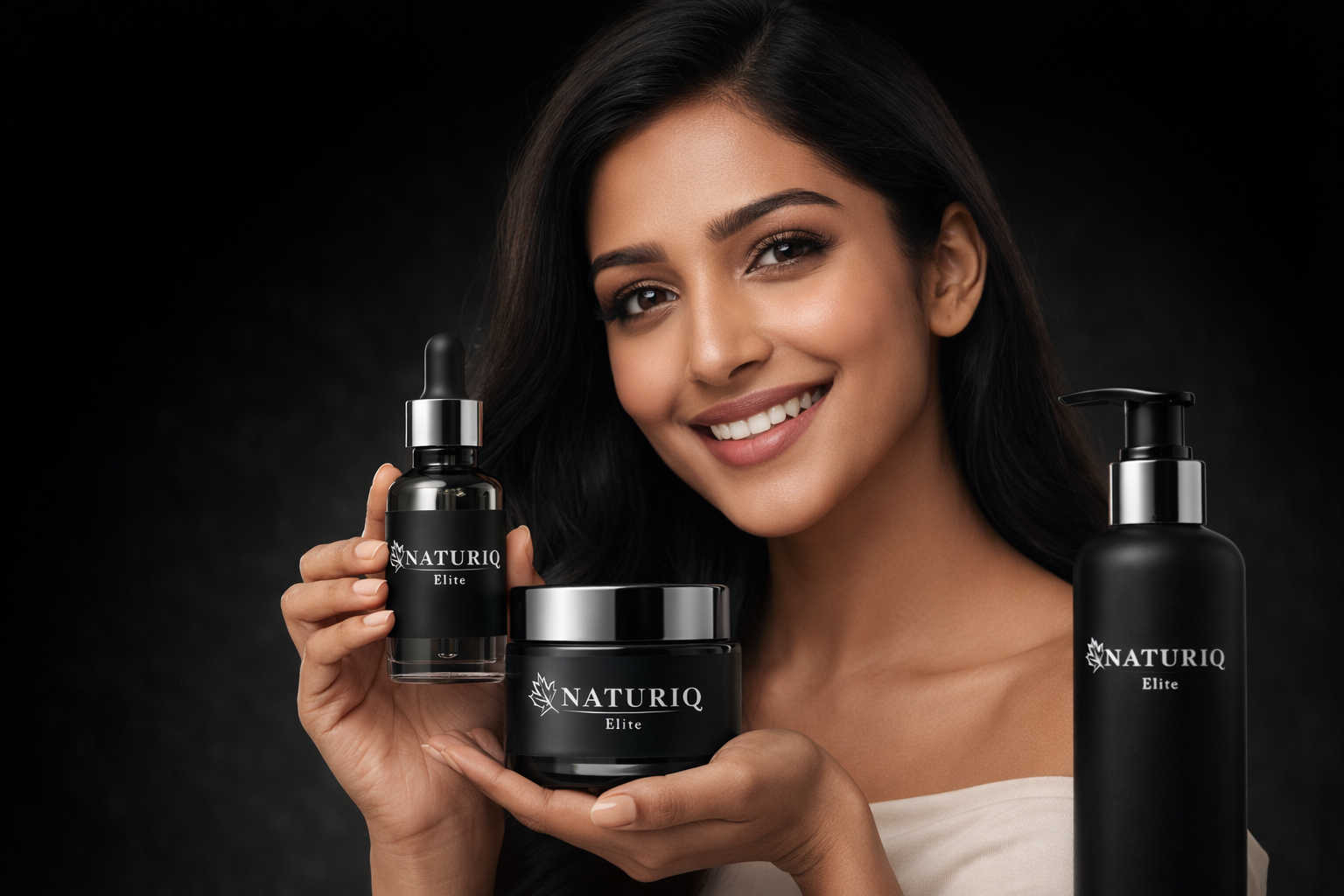
Advanced Radiance Face Serum
Niacinamide 10% + Vitamin C + Retinol
Coming SoonOily Skin & Humidity Control
India's average humidity ranges from 60–90% across coastal and monsoon-affected cities — Mumbai, Chennai, Kolkata, Kochi. In these conditions, sebaceous glands produce excess sebum, pores enlarge, makeup breaks down within hours, and the skin feels perpetually congested and shiny.
Why Standard Skincare Fails
Most imported skincare is formulated for temperate Western climates — heavier textures, emollient-rich formulas that suffocate Indian oily skin in tropical humidity. The result: clogged pores, breakouts, and wasted products.
The Naturiq Elite Approach
- pH 5.5 Cleanser — removes sebum without disrupting acid mantle, preventing rebound oil production
- Ceramide Complex — repairs barrier so skin stops producing excess oil as a defence mechanism
- Niacinamide 10% — proven in clinical studies to reduce sebum excretion rate by up to 52%
- Water-fluid SPF texture — zero greasiness, stable in 85% humidity for 6+ hours
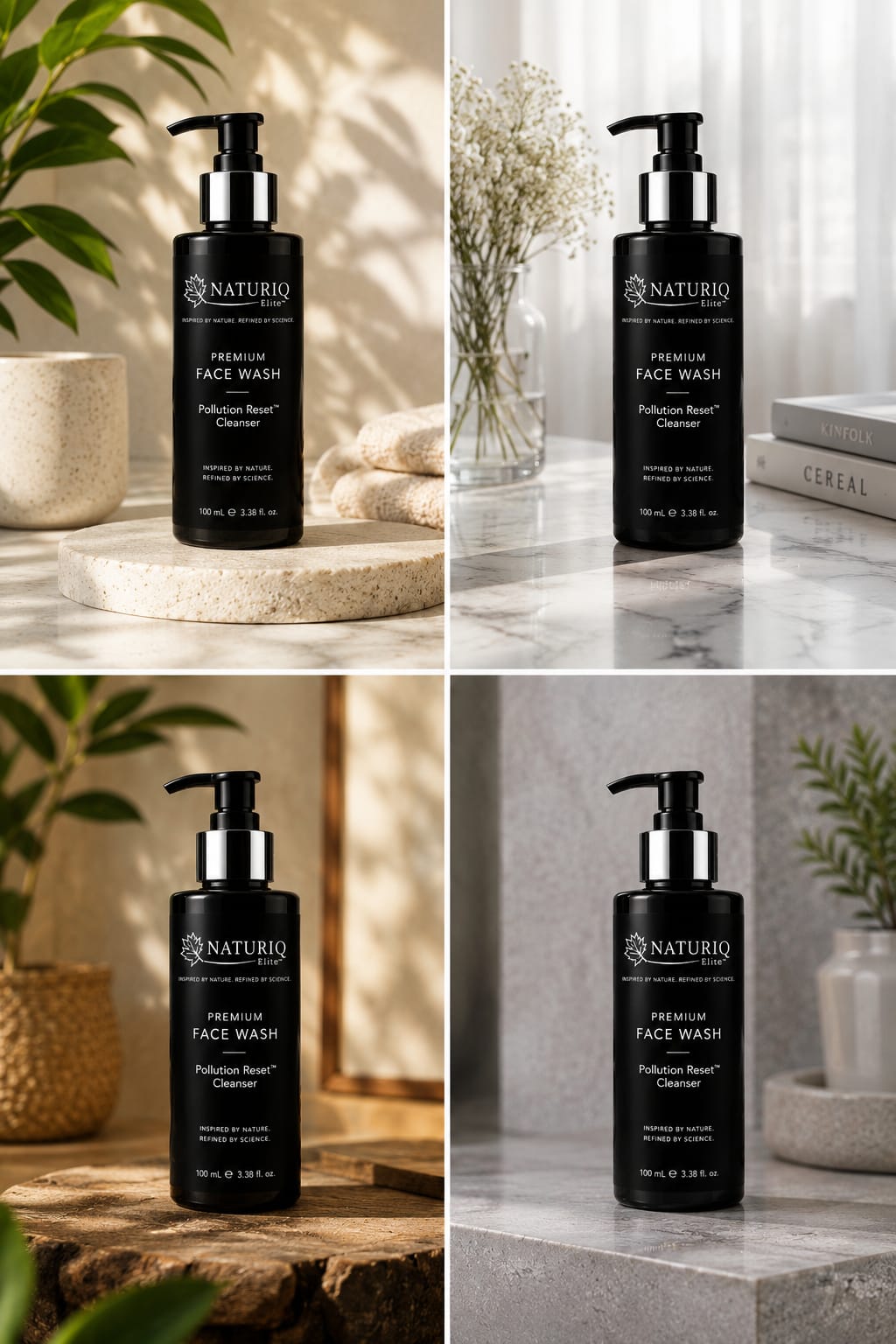
Purifying Botanical Face Wash
pH 5.5 · Ceramides · Centella Asiatica
Coming SoonSun Damage, Tanning & UV Pigmentation
India sits between latitudes 8°N and 37°N — receiving some of the highest UV radiation levels in the world for 8–10 months of the year. UV Index 8–11 (Very High to Extreme) is standard in Delhi, Mumbai, Bangalore and Hyderabad between March and October, peaking between 10am and 4pm daily.
What UV Does to Indian Skin
UVB causes immediate tanning and sunburn. UVA penetrates deeper, damages collagen, triggers PIH in Indian skin phototypes, and accelerates premature ageing. Without SPF 50+ PA++++, unprotected Indian skin accumulates UV damage daily — even in shade and on cloudy days (70% UV still penetrates cloud).
The Naturiq Elite Approach
- SPF 50+ hybrid filter — blocks 98% UVB via nano Zinc Oxide + Tinosorb S
- PA++++ — highest UVA protection rating in Asian rating system
- Niacinamide 5% — actively prevents UV-triggered melanin overproduction
- Zero white cast — nano-dispersed zinc renders invisible on Fitzpatrick III–VI
Invisible Shield Sunscreen SPF 50+ PA++++
Zero White Cast · Hybrid UV Filter
Coming SoonUrban Pollution & Oxidative Stress
Delhi's AQI regularly exceeds 300 (Hazardous). Mumbai, Bangalore and Hyderabad average AQI 150–200 year-round. PM2.5 particles penetrate pores at 2.5 microns — depositing heavy metals, polycyclic aromatic hydrocarbons and free radicals directly onto skin cells. This triggers inflammation, breaks down collagen, causes oxidative stress and accelerates ageing 10–15% faster than in clean-air environments.
Double Cleanse
PM2.5 binds to sebum. A face wash with Bio-Fermented Green Tea antioxidants removes pollution while protecting skin from its free radicals simultaneously.
Antioxidant Shield
Bio-Fermented Vitamin C and Green Tea polyphenols neutralise the free radical cascade triggered by PM2.5 exposure throughout the day.
Barrier Repair
Ceramide-1, -3, -6 complex rebuilds the compromised lipid barrier that pollution disrupts — your skin's first line of defence.
Questions Indian skin asks. Answered by science.
What is the best skincare routine for oily skin in Indian humidity?
For oily skin in India's humid climate: (1) pH 5.5 sulphate-free face wash — removes sebum without triggering rebound oil; (2) 10% Niacinamide serum — reduces sebum excretion rate clinically; (3) lightweight non-comedogenic SPF 50+ PA++++ — protects without adding greasiness. Avoid heavy creams and facial oils during monsoon and summer months.
How do I treat hyperpigmentation and dark spots on Indian skin?
The most evidence-backed combination for Indian skin PIH: Niacinamide 10% (inhibits melanosome transfer) + Bio-Fermented Vitamin C (inhibits tyrosinase) + Retinol 0.3% (accelerates cell turnover) + daily SPF 50+ PA++++ (prevents UV from worsening existing pigmentation). Results are visible in 2–4 weeks, significant in 6–8 weeks with consistent twice-daily use.
Is sunscreen necessary for dark Indian skin tones?
Yes. Darker skin tones are more, not less, prone to UV-induced hyperpigmentation and PIH. Melanin provides approximately SPF 13 natural protection — completely insufficient against India's UV Index 8–11. Daily SPF 50+ PA++++ is essential regardless of skin tone. Choose a formula with zero white cast specifically tested on Indian skin tones (Fitzpatrick III–VI).
Which skincare ingredients protect Indian skin from Delhi pollution?
For pollution-stressed Indian skin: Bio-Fermented Green Tea (polyphenols neutralise PM2.5-generated free radicals), Niacinamide (anti-inflammatory, strengthens barrier against particulate penetration), Ceramide-1, -3, -6 (repairs lipid barrier disrupted by PM2.5), and Vitamin C (broad antioxidant coverage). A thorough evening double-cleanse is critical to remove particulate deposits before they cause overnight oxidative damage.